Phool.Co Case Study /
Trailblazers of the Me-conomy Blog Series
Deep Dive into the brands I love
This case study explored the evolution of Phool.co, a homegrown brand known for transforming temple flower waste into sustainable products like incense and biodegradable packaging. I closely studied its foundation, mission and vision, product innovation, marketing strategies, brand voice, and key partnerships that contributed to its success.
What made this analysis stand out was understanding how Phool.co built a compelling narrative around environmental consciousness, circular design, and social impact. It wasn’t just about product or profit—it was about positioning purpose at the heart of the brand. They didn't 'preach' sustainable living, they directly gave us a way to do it. This project thus helped sharpen my lens on how strategy, design thinking, and storytelling come together to build a brand that is both culturally rooted and future-forward.
Softwares used : Adobe Illustrator, Procreate, Figma

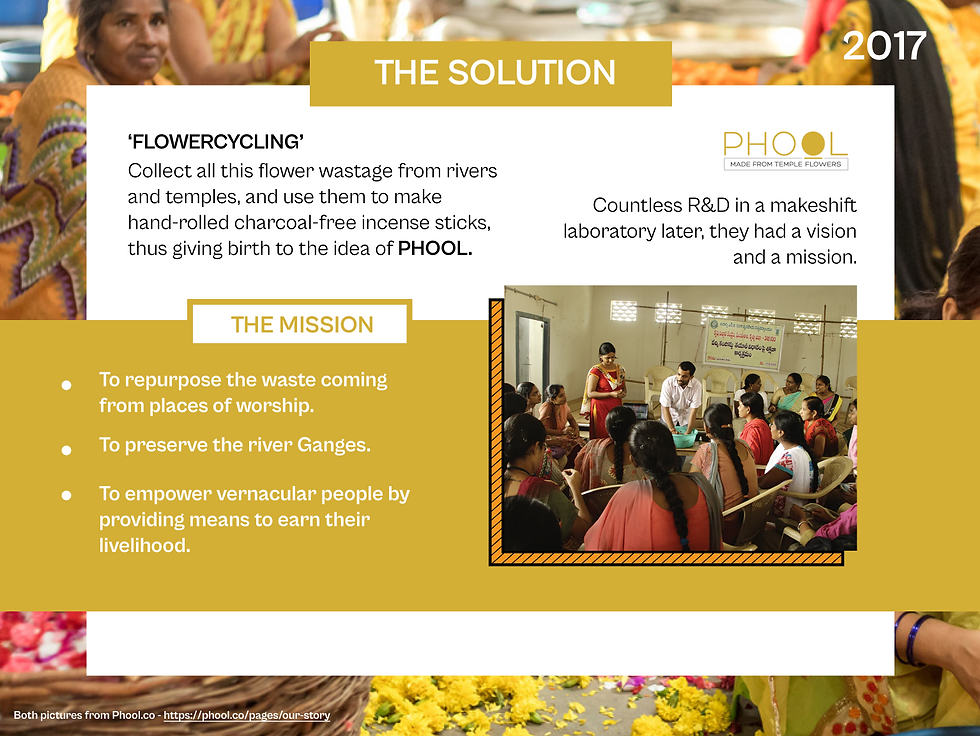
Infographic on Phool.Co's Brand Story




-
Storytelling in Branding / Phool isn’t built on borrowed narratives. Its story grows from the ground up—literally. From repurposing temple flowers to uplifting the women who craft each product, the brand doesn’t just tell a story; it lives one. I learned that storytelling in branding is most powerful when it seeps into every detail—when it’s not just heard, but felt.
-
Authenticity >> /In an age of overdesigned D2C sameness, Phool stands out by staying close to its values. Their visual language is calm, vibrant, yet unforgettable. What struck me was their ability to remain deeply rooted in Indian context while being globally relevant—proof that boldness doesn't have to shout to be remembered.
-
Beyond the Label / Phool’s circular model isn’t just for show. Sustainability, employment, and impact are a part of the brand’s DNA. It taught me that when purpose drives the business model, branding becomes effortless, and trust follows naturally. They never try to sell sustainability as a trend. They let their work speak for itself. Their approach taught me that when design is led by integrity—not urgency—it naturally creates a long-term emotional connection.